
Blanket Sourcing
Blanket Sourcing Details to Confirm Before Sampling
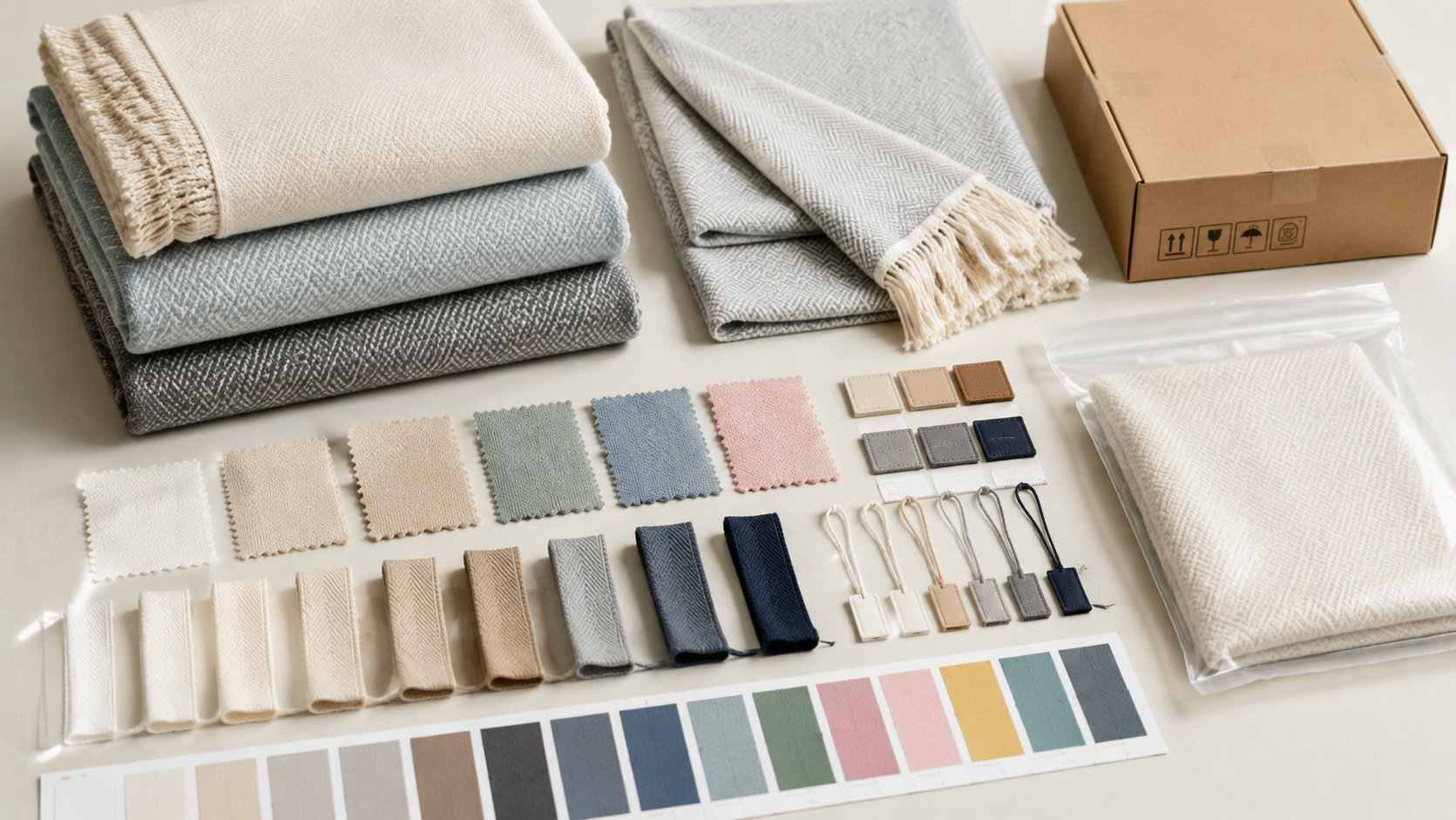
A blanket RFQ should define fabric direction, size, weight, edge finish, color, label, packaging, sample purpose, and inspection points. For Aida Textiles, regular woven cotton and project-based blanket directions can be discussed, while unsupported special-fabric claims should not be assumed without confirmation.
A blanket RFQ should show material direction, edge finish, size, weight, color, label, and packaging as one sourcing package.
Blanket sourcing becomes easier when buyers define the product role before asking for a sample. A sofa throw, travel blanket, aviation blanket, baby blanket, cooling blanket, cotton blanket, and textured blanket may all need different material, size, weight, edge finish, label, and packaging direction.
| Decision point | What the buyer should confirm | Why it matters |
|---|---|---|
| Fabric direction | Regular woven cotton, cooling direction, sofa throw, travel blanket, or buyer-specified material. | Material affects touch, weight, finishing, packing, and whether the product fits Aida's practical product scope. |
| Size and weight | Finished dimensions and GSM or finished weight direction. | Blanket size and weight control carton count, freight volume, and perceived value. |
| Edge finish | Hem, binding, fringe, folded edge, or other project-based finish. | The edge finish changes appearance, labor, durability, and sample review points. |
| Packaging | Zipper bag, paper band, carton pack, gift box, vacuum pack if suitable, or private label presentation. | Blanket packaging strongly affects retail display and logistics planning. |

Use the guide to define what the blanket sample must prove before the supplier quotes or develops it.
- State the blanket role first: sofa throw, travel blanket, bed blanket, baby blanket, hotel, gift, or buyer-defined program.
- Confirm size, material direction, weight, edge finish, color, label position, and packaging expectation.
- Review the sample against warmth or touch, edge finish, packed presentation, and repeat-order consistency.
A blanket sample brief gives the supplier a target to develop against. It tells the factory whether the buyer is trying to solve warmth, compact packing, gift presentation, hotel durability, or retail shelf appeal, so the first sample is closer to a commercial product and not just a fabric guess.
The first sample should not be a guess. It should be based on a clear brief: use case, season, target customer, size, material direction, weight or GSM, color, edge construction, logo or label, packaging, quantity, and destination market. These details help the supplier understand what should be tested and what still needs confirmation.
Blanket projects often go wrong when everyone agrees on a nice reference photo but nobody agrees on the job of the blanket. A sofa throw is judged by color, texture, and folded presentation. A travel blanket may be judged by compact packing. A hotel or hospitality blanket needs practical washing and repeatable replenishment. Those are different products, even when the photo looks similar.
Define the blanket use case
Start by explaining how the blanket will be used. Retail sofa throws need visual appeal, hand feel, and packaging presentation. Travel blankets may need compact packing and lighter weight. Aviation blankets need practical size and repeatable bulk packing. Baby blankets require careful hand feel and label placement. Hotel or hospitality blankets may need durability and consistent replenishment.
Choose material direction carefully
Blanket material can include cotton, flannel direction, cooling fabric direction, blended fabric, textured fabric, or other buyer-directed materials after project confirmation. Each direction has different touch, warmth, washing expectation, and cost structure. Buyers should not compare two blanket quotations unless the material, size, weight, and finishing direction are the same.
The safest early wording is usually material direction, not a public product claim. If a buyer wants a cooling direction, a cotton direction, or a textured retail look, the sample can explore that direction first. Formal fiber content, certification wording, and hang-tag claims should only be used after documents and product scope are checked.
If the project requires a certification claim or special material statement, confirm document scope early. It is safer to discuss "material direction" during development and only use formal claims when certificates and product applicability are verified.
Confirm size, weight, and season
Blanket size affects both customer experience and carton planning. A throw blanket, bed blanket, kids blanket, and travel blanket should be sized for their role. Weight affects warmth, hand feel, shipping cost, and retail presentation. Season also matters: a lightweight summer blanket, a warmer winter blanket, and a year-round sofa throw may need different construction.
Review edge finish and branding
Edge finish changes both appearance and durability. Options may include folded hem, binding, overlock, fringe, or other project-specific constructions. Branding can involve woven labels, wash labels, embroidery, hang tags, paper bands, zipper bags, gift boxes, or carton marks. Share artwork and packaging references before sample development if private label presentation is important.
Evaluate samples with a checklist
When reviewing a blanket sample, check size, weight, hand feel, edge finish, color, label placement, packaging fit, and comparison with the reference sample. If the blanket will be sold online or in retail, review how it looks folded and packed, not only how it feels unfolded.
What to include in a blanket RFQ
Send blanket type, material direction, size, weight or GSM, season, color, edge finish, logo or label, packaging, estimated quantity, destination market, and sample expectation. A reference photo or current product is especially helpful when the buyer wants a specific hand feel or visual style.
Build a blanket sample brief before asking for price
For blanket projects, the sample brief should state the product role first: sofa throw, travel blanket, bed blanket, baby blanket, cooling direction, or buyer-defined program. Then add size, material direction, weight, edge finish, color, label position, packaging, and what the sample must prove.
This prevents the supplier from guessing whether the buyer wants warmth, compact packing, retail presentation, hotel practicality, or gift packaging. Those goals lead to different fabric and finishing decisions.
Blanket details to lock before bulk production
Before production, confirm fabric direction, finished size, target weight, edge finish, label placement, packaging, carton mark, and inspection checkpoints. Avoid public material or certification claims unless the document scope and product applicability are confirmed.
When one blanket detail is still open, write it as an open decision instead of hiding it. For example, note whether the buyer still needs advice on weight, edge finish, or packaging. That makes the next supplier reply more useful and keeps unsupported material or certification claims out of the public product story.
- Confirm fabric direction and avoid unsupported special-fabric assumptions unless separately reviewed.
- Send target size, weight, color reference, edge finish, and label position.
- State whether the blanket is for retail, hotel, travel, gift, ecommerce, or promotional use.
- Share packaging needs, carton mark requirements, and whether private label elements are needed.
- Define what the sample must prove: hand feel, size, edge, color, packaging fit, or finished presentation.
- Do not use the word blanket alone when comparing suppliers.
- Do not approve bulk production from a swatch if edge finish and packaging are also important.
- Do not publish certification or material claims until documents and product scope are confirmed.
FAQ
What is the most important blanket sourcing detail?
Use case comes first. Material, size, weight, edge finish, packaging, and price should all follow the product role.
Can blanket weight replace GSM?
Weight can help, but buyers should define size and construction too. Finished weight alone does not describe material or hand feel.
Should branding be decided before blanket sampling?
If the project is private label, yes. Logo, label, hang tag, and packaging can affect sample preparation and final presentation.
How should I compare blanket suppliers?
Ask each supplier to quote the same material, size, weight, edge finish, packaging, quantity, and sample requirement.