
Private Label Packaging
Private Label Packaging Checklist for Towels, Blankets, and Bedding
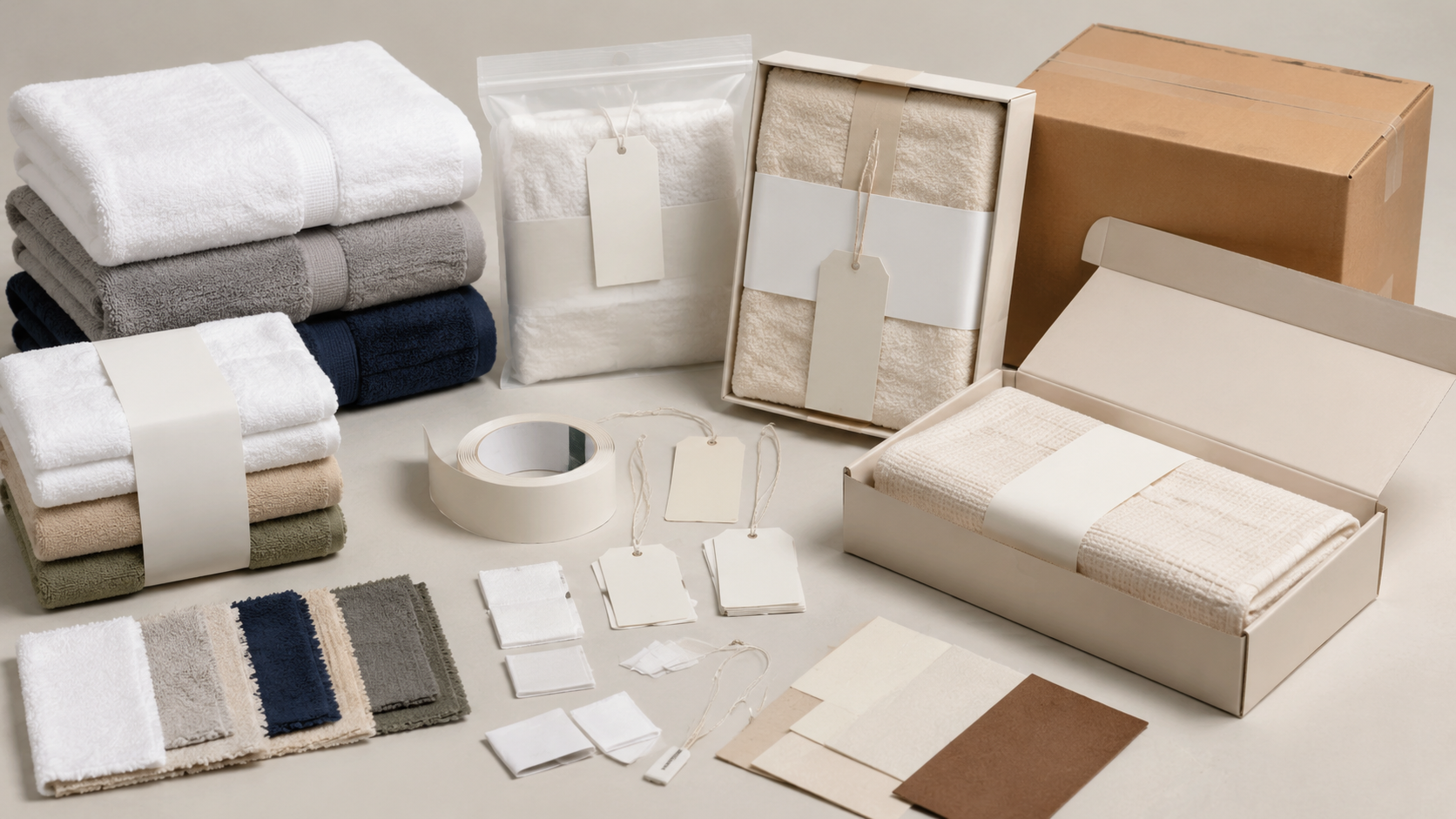
Private label packaging is part of the product experience. Buyers should define label system, retail pack, barcode or insert card, carton marks, folding method, and sample approval before bulk production.
Private label packaging should be reviewed as a system: product fold, label, tag, bag or box, insert card, barcode, and carton mark.
Private label packaging turns a textile product into a sellable program. A towel, blanket, or bedding set may be technically correct but still fail the buyer's needs if labels, hang tags, barcode stickers, packaging bags, insert cards, and carton marks are not defined early. Packaging affects sampling, quotation, carton planning, retail presentation, and warehouse handling.
| Decision point | What the buyer should confirm | Why it matters |
|---|---|---|
| Product labels | Woven label, wash label, size label, hang tag, sticker, or barcode. | Labels affect brand identity, care information, and retail compliance discussions. |
| Unit packaging | Paper band, zipper bag, mesh bag, drawstring bag, gift box, insert card, or bulk pack. | Unit packaging controls shelf presentation and packing labor. |
| Carton planning | Pieces per carton, carton mark, PO mark, destination information, and carton size direction. | Importers and distributors need cartons that are easy to receive and identify. |
| Approval files | Artwork, dieline if available, color reference, sample photo, and approved reference pack. | Packaging errors often come from unconfirmed artwork or folding assumptions. |

Use this checklist to review packaging as part of the product, not an afterthought.
- Confirm product fold, label placement, hang tag, wash label, barcode, insert card, bag or box, and carton mark.
- Test packaging with the real product inside so dimensions and presentation are checked together.
- Keep artwork versions, packing photos, and carton mark files for repeat orders.
A private-label packaging system connects the product, the sales channel, and the warehouse. When labels, barcodes, unit packs, carton marks, and sample approvals are reviewed together, packaging becomes a controlled part of the order instead of an afterthought.
Before sample development, buyers should separate product specification from packaging specification. The product specification covers material, size, GSM or weight, color, sewing, and logo. The packaging specification covers how the item is folded, labeled, packed, scanned, stored, and presented.
Private-label packaging is where small missing details become expensive. A towel or bedding item may be correct, but the order can still create trouble if the barcode is wrong, the hang tag is missing, the carton mark does not match the buyer's warehouse rule, or the folded size does not fit the retail package.
Start with the sales channel
Packaging should match the sales channel. A hotel replenishment carton may need simple clear packing and carton marks. A retail towel set may need a paper band, hang tag, barcode, and shelf-friendly folding. An ecommerce bedding set may need a zipper bag, insert card, barcode, and outer carton plan. A gift blanket may need a box or branded band.
Confirm labels and tags
Private label textile programs commonly involve woven labels, wash labels, hang tags, care labels, size labels, and brand labels. Each label needs size, artwork, placement, material, and language confirmation. Wash labels should match the product and market requirements. If legal or compliance wording is required, the buyer should provide approved copy.
Define unit packaging
Unit packaging may include zipper bag, PVC bag, mesh bag, drawstring bag, paper band, gift box, wrap, insert card, or sticker. The supplier needs to know the packing method before final quotation because packaging affects material cost, labor, carton size, and sample presentation.
- Towels: folded bulk pack, paper band, zipper bag, hang tag, gift box, or set packing.
- Blankets: paper band, zipper bag, gift box, insert card, or compressed pack if discussed.
- Bedding: zipper bag, insert card, size card, barcode, and component label.
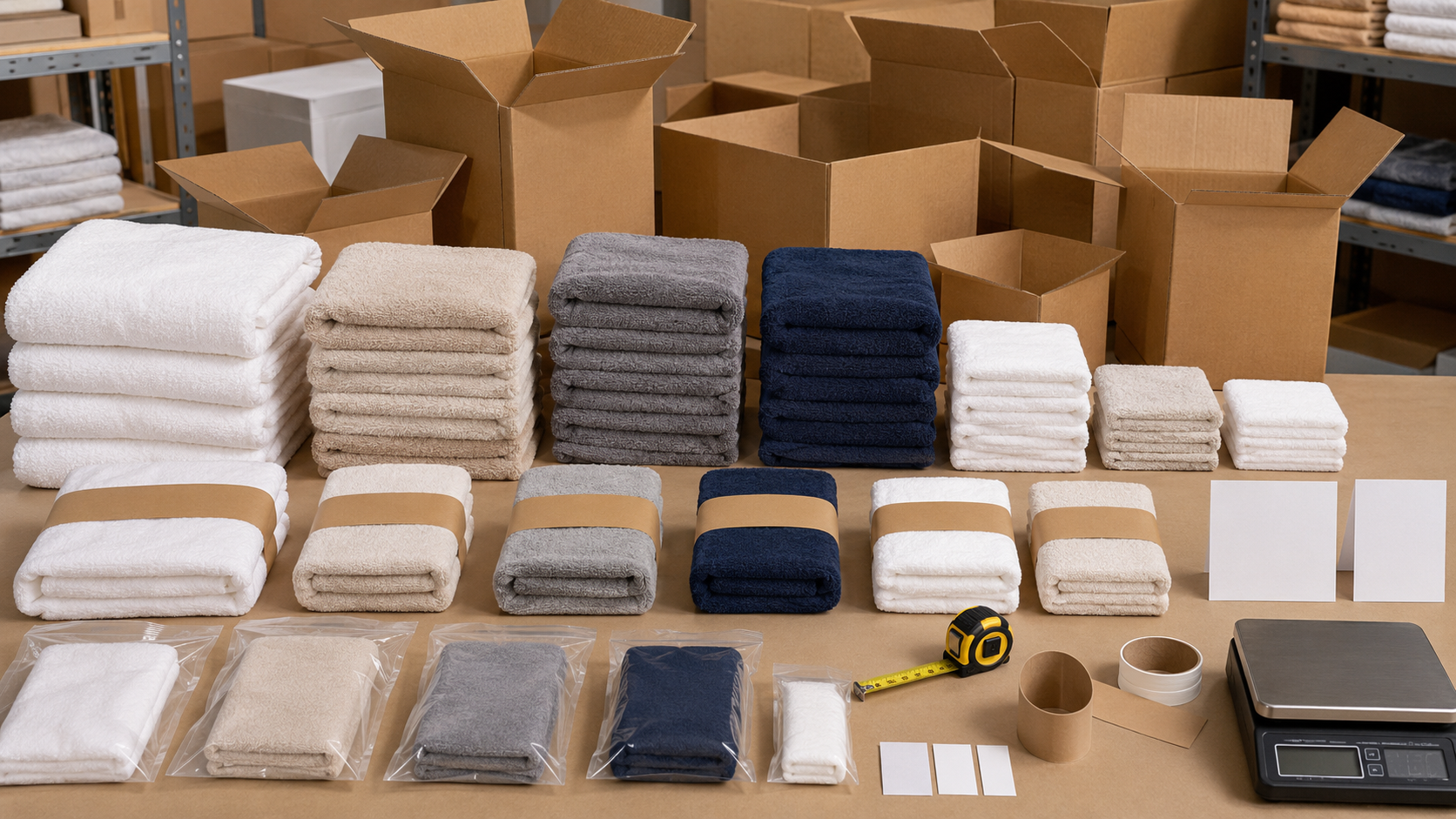
Do not forget carton marks
Carton marks help warehouses and importers identify product, quantity, color, size, PO number, destination, and handling details. If the buyer has carton mark requirements, send them before bulk packing is confirmed. Carton mark mistakes can create receiving issues even when the product itself is acceptable.
Carton marks are not glamorous, but they matter at receiving. Buyers should confirm item name, SKU, color, size, quantity per carton, gross and net weight if required, carton dimensions, destination markings, and any retailer or warehouse instructions before bulk packing begins.
Prepare artwork and barcode files
Artwork should be provided in a usable format whenever possible. Confirm logo file, label layout, hang tag design, barcode number, sticker size, and insert card content. If artwork is still being developed, the sample can begin with placeholder direction, but final approval should use confirmed files.
Review packaging samples
Packaging should be reviewed with the actual product inside. Check fold style, label visibility, barcode readability, bag fit, carton quantity, and presentation after transport. A package that looks good empty may not fit well once the towel, blanket, or bedding set is packed.
Review packaging as a full private-label system
Private label packaging should be reviewed as a system, not as separate accessories. Product fold, label, hang tag, wash label, barcode, insert card, bag or box, carton mark, and shelf presentation all affect the buyer's final product.
A packaging checklist is especially useful for importers, distributors, ecommerce sellers, and retail brands because packaging errors can create receiving, barcode, compliance, and customer-presentation problems even when the textile itself is acceptable.
Packaging files and samples to approve
Before moving forward, confirm artwork files, barcode data, label placement, care label wording, packaging dimensions, folding method, carton mark, and whether the packaging sample has been reviewed with the real product inside.
If packaging is still developing, approve the product sample and packaging sample as separate decisions. This gives the buyer room to refine artwork, barcode, fold style, and carton details without confusing them with fabric or sewing approval.
- Label types and where each label should be placed.
- Packaging format and whether the logo/label must be visible after folding.
- Barcode, insert card, hang tag, paper band, or gift box requirements.
- Carton mark content, pieces per carton, and destination requirements.
- Artwork status and what the packaging sample must prove.
- Do not treat packaging as an afterthought for private label projects.
- Do not approve only the open product if it will be sold folded or boxed.
- Do not print certification or compliance claims without verified documents.
FAQ
When should packaging be discussed?
Packaging should be discussed before sampling and quotation because it affects cost, labor, carton size, and presentation.
Can private label packaging include barcodes?
Yes, but the buyer should provide barcode numbers, sticker size, placement, and any retailer requirements.
Do labels affect sampling?
Yes. Woven labels, wash labels, hang tags, and placement should be reviewed on the sample when private label presentation matters.
What if packaging artwork is not ready?
The buyer can discuss a direction first, but final sample approval should use confirmed artwork and packaging files.