
Towel RFQ Guide
How to Prepare a Towel RFQ for Faster and More Accurate Quotation

A strong towel RFQ is a compact specification sheet. It should tell the supplier what is fixed, what is flexible, what the sample must prove, and which details affect quotation: towel type, size, GSM, material, color, logo, label, packaging, quantity, market, and timing.
A complete towel RFQ connects product type, size, GSM, material, logo, label, packaging, quantity, sample purpose, and destination market.
A useful towel RFQ is not a long document. It is a clear set of decisions that lets the supplier understand what you want to buy, what still needs to be discussed, and which details affect sampling and quotation. For wholesale towel projects, the most important information is towel type, size, GSM, material, color, logo method, labels, packaging, quantity, destination market, and sample expectation.
| Decision point | What the buyer should confirm | Why it matters |
|---|---|---|
| Product base | Towel type, use case, size, GSM, material, color, and edge finish. | The supplier needs the base product before any reliable price or sample plan. |
| Branding | Logo method, artwork, placement, label, hang tag, barcode, or insert card. | Branding can change sampling, production steps, and packaging design. |
| Packaging | Bulk, paper band, zipper bag, mesh bag, drawstring bag, gift box, carton marks, and pieces per carton. | Packaging affects price, labor, carton volume, and buyer presentation. |
| Commercial context | Quantity range, destination market, sample purpose, target timing, and flexible/open items. | Context helps the supplier suggest practical options instead of guessing. |

Use this guide to send suppliers a quotation request they can answer without guessing.
- Start with towel type, measured size, GSM or weight direction, material, color, and target use.
- Add logo, label, packaging, quantity, destination market, and sample purpose before asking for price.
- Compare replies by assumptions and exclusions before treating any quote as final.
A quote-comparison document helps the buyer see whether suppliers answered the same question. If one quote includes private-label packaging and another does not, the sheet makes the difference visible before price negotiation starts.
Many quotation delays happen because the first inquiry only says "send towel price" or "need bath towel." A bath towel for a hotel replenishment program, a cotton towel for retail, a promotional towel with a printed logo, and a baby towel set may all require different materials, weights, packaging, and quality checks. The clearer the RFQ, the easier it is to compare suppliers fairly.
A strong towel RFQ does not need fancy language. It needs the information a factory uses to choose material, estimate weight, check logo feasibility, plan packaging, and quote on the same basis. The buyer saves time when the first email already answers the supplier's natural follow-up questions.
Start with the use case and towel type
Begin by explaining where the towel will be sold or used. The end use changes almost every sourcing decision. A hotel towel usually needs repeatable color, practical absorbency, stable washing performance, and carton marking. A retail towel may need stronger shelf presentation, labels, paper bands, zipper bags, or gift boxes. A promotional towel may care more about logo placement, color matching, and budget control.
- Bath towel, bath sheet, hand towel, face towel, beach towel, baby towel, sport towel, yoga towel, or towel set.
- Retail, hotel, spa, gym, ecommerce, promotional, baby care, or private label use.
- Single item, towel set, seasonal program, replenishment order, or new product test.
Define size, GSM, and material direction
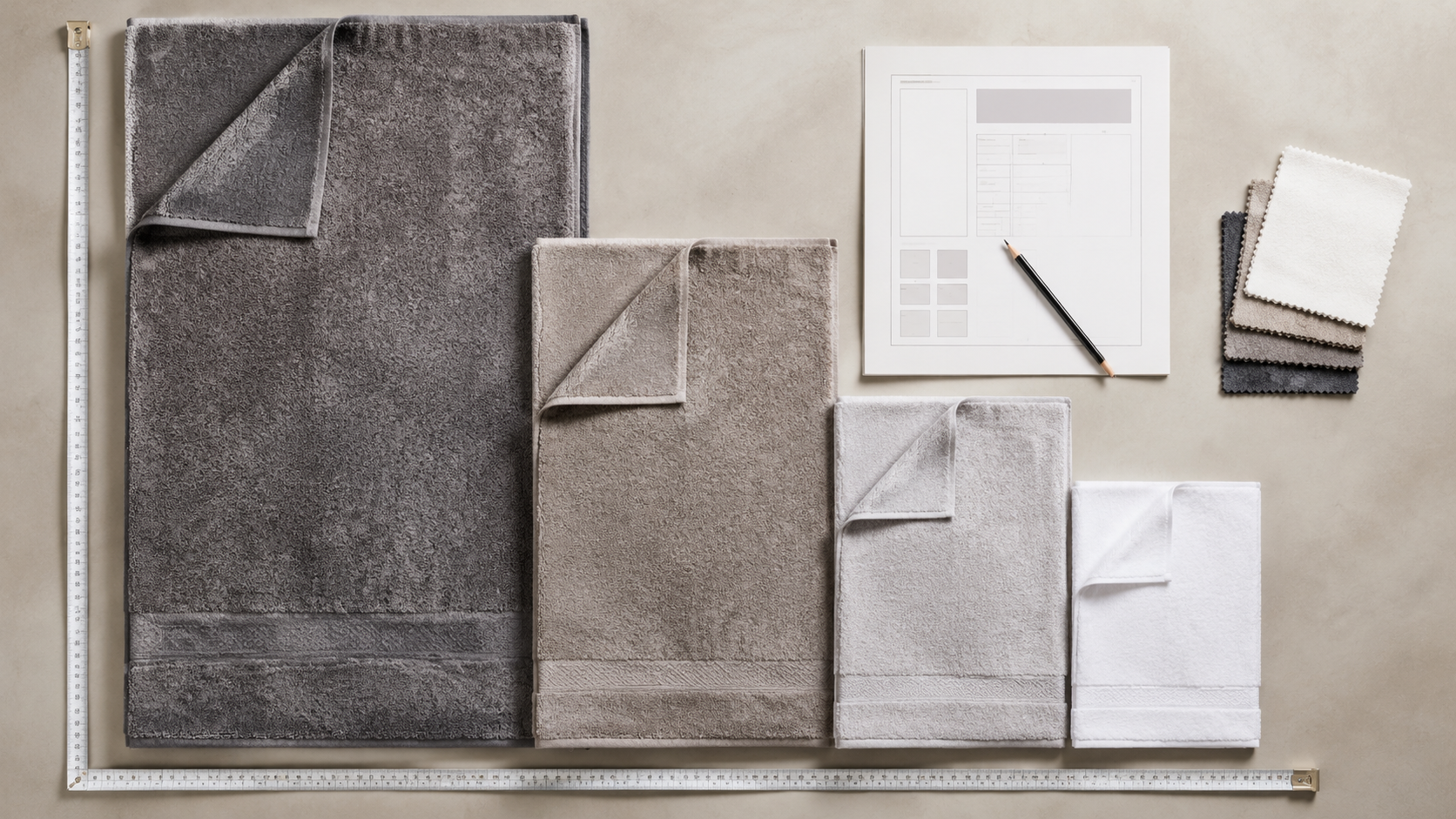
Size and GSM determine towel weight, hand feel, packing volume, and price direction. If you already have a size chart, include it. If you do not, describe the expected market level: lightweight promotional towel, daily retail towel, hotel bath towel, premium bath sheet, or soft baby towel. The supplier can then discuss practical size and GSM directions before sampling.
Material direction should be stated as clearly as possible. Cotton terry is common for everyday towel programs. Bamboo blend can be discussed when a softer hand feel is required. Gauze, waffle, microfiber, or buyer-directed fabrics may fit special categories after project confirmation, but they should not be compared as if they were the same towel. Each texture has a different hand feel, absorbency direction, care expectation, and cost structure.
Share color, logo, and label requirements early
Color and branding can change the quotation. A solid dyed towel, yarn-dyed direction, jacquard pattern, embroidery, screen print, heat transfer, woven label, wash label, or hang loop can all affect sampling. If the project is private label, include the logo file if available, expected placement, approximate logo size, and any label or hang tag requirements.
If artwork is not ready, say so. A supplier can still discuss possible methods, but a final sample should be based on confirmed artwork, color reference, and placement. For color, a Pantone reference, physical sample, or current product photo is more useful than a general phrase such as "light blue" or "hotel white."
Clarify packaging and carton expectations
Packaging is part of the product, not an afterthought. Towels can be packed in bulk, tied as sets, folded with a paper band, placed in zipper bags, packed in gift boxes, or prepared with hang tags and barcode labels. Carton marks and packing quantity also matter for importers, ecommerce sellers, distributors, and hotel buyers.
- Unit packing: bulk, paper band, zipper bag, mesh bag, drawstring bag, gift box, or custom retail pack.
- Labeling: woven label, wash label, hang tag, sticker, barcode, insert card, or carton mark.
- Logistics: pieces per inner pack, pieces per carton, carton mark language, and destination market.
Include quantity, sample needs, and open questions
Quantity affects production planning and quotation structure. If the order plan is not final, provide an estimated range and explain whether the project is a test order, seasonal program, repeat order, or long-term private label line. Sample needs should also be clear: are you checking fabric, color, logo, packaging, or a complete finished product?
It is acceptable to leave some items open. A good RFQ can include "to be discussed" for details that require supplier input. The key is to separate confirmed requirements from flexible points so the supplier does not quote assumptions as if they were final.
Sample development details that prevent rework
Towel sample development should have a clear approval purpose. Tell the supplier whether the sample is mainly for hand feel, finished size, GSM direction, color, logo clarity, label placement, packaging fit, or a full retail presentation. A sample can only be judged fairly when everyone knows what it is supposed to prove.
For OEM and private label towel projects, include artwork files if available, label size, packaging mockup, barcode or insert-card needs, and any carton-mark requirement. If the artwork is not ready, say that it is pending and ask which file format will be needed. This keeps the sample conversation honest instead of pretending the design is final.
RFQ template buyers can send
Use this structure when contacting a towel supplier: product type, use case, size, GSM, material, color, logo method, labels, packaging, quantity, destination market, sample request, reference photo, and target timing. Attach any artwork, product photo, packaging example, or current specification sheet you already have.
The template should feel like a working document, not a sales brochure. Buyers can write unknown items as open questions: “Please suggest GSM for hotel use,” or “Packaging still under review.” Clear uncertainty is better than a confident but wrong specification.
Turn the RFQ into a quote-comparison document
A towel inquiry becomes useful when it allows several suppliers to quote on the same basis. Put towel type, size, GSM, material, color, logo, label, packaging, quantity, sample purpose, and destination market into one RFQ document before asking for price.
If one detail is not decided, write it as open instead of hiding it. A good supplier can suggest practical directions, but the buyer should still record which assumptions were used in the quotation.
RFQ details to verify after suppliers reply
After receiving quotations, check whether each supplier used the same size, GSM, material, packaging, logo scope, sample requirement, and carton plan. If not, ask for a revised quote before comparing prices.
If the RFQ is incomplete, send the current information anyway and label the uncertain points. A practical supplier can help narrow the options, but the buyer should update the written RFQ before approving samples or comparing final prices.
- Towel type and target use.
- Size, GSM or finished weight, material, color, and edge finish.
- Logo artwork, label, hang tag, barcode, insert card, and packaging requirements.
- Sample development purpose: hand feel, color, logo, label, packaging, or full product approval.
- Quantity range, destination market, and target timing.
- Reference photo, current sample, or examples of acceptable quality level.
- Do not ask for towel price without size and GSM.
- Do not leave logo and packaging out of the first inquiry if they are required.
- Do not hide uncertain details; mark them as flexible so the supplier can advise.
FAQ
Can I ask for a quote before all details are confirmed?
Yes. Send the confirmed details first and mark open items as flexible. The supplier can provide a direction, but final quotation should be based on confirmed specification, artwork, packaging, and quantity.
Is GSM enough to quote a towel?
No. GSM helps, but size, material, yarn direction, color, logo, finishing, packaging, and quantity also affect quotation.
Should I send a reference photo?
Yes. A reference photo helps the supplier understand texture, folding style, color direction, packaging level, and market positioning.
What if I do not know the right towel size?
Describe the use case and target market. The supplier can discuss common size directions before sample development.