
Towel Pricing Factors
What Affects Wholesale Towel Pricing Before Quotation
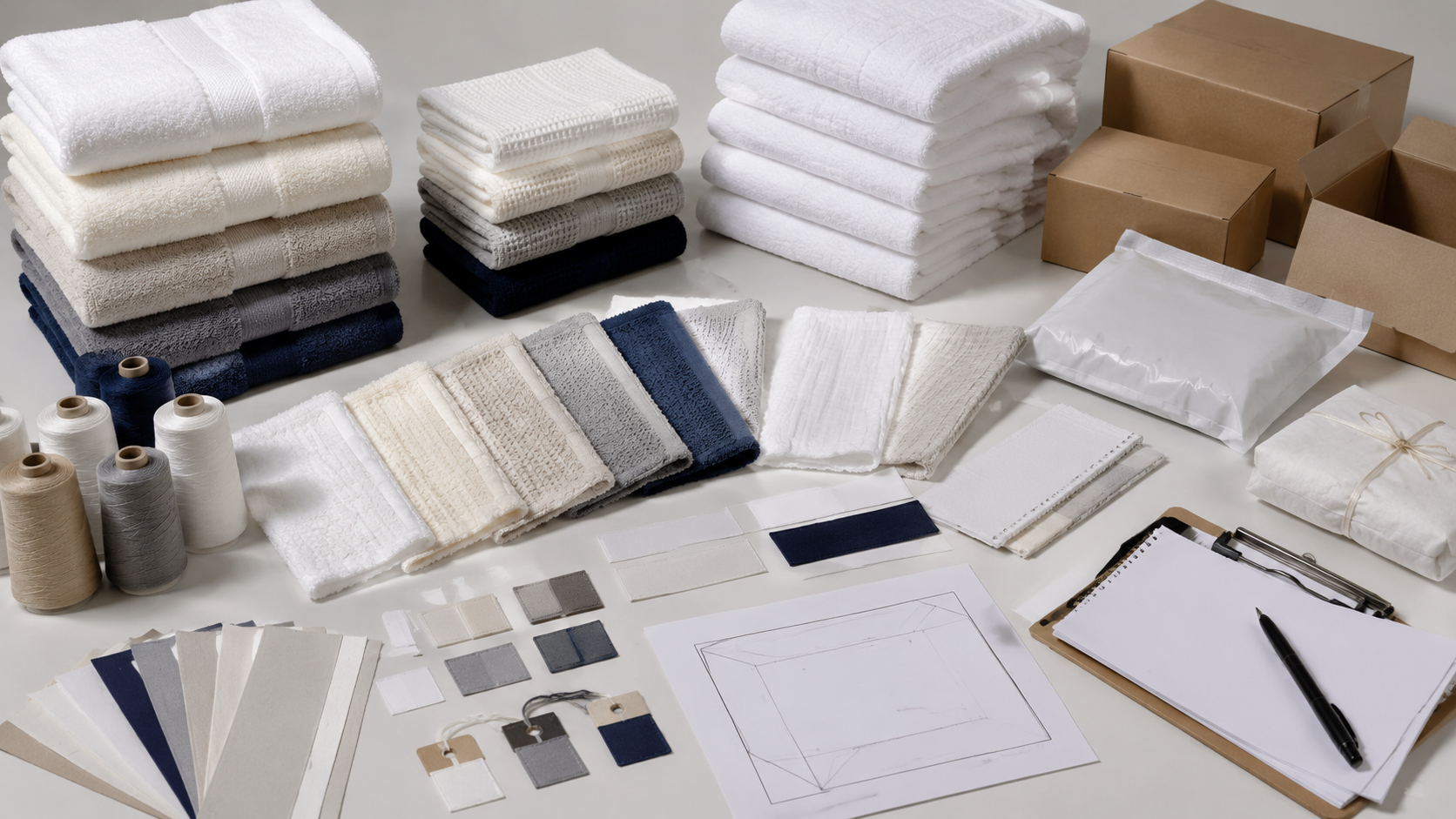
Wholesale towel pricing changes when specification changes. Buyers should compare size, GSM, material, color, logo method, labels, packaging, quantity, carton plan, sample work, and documentation scope before judging whether a price is high or low.
Wholesale towel price depends on product specification, branding scope, packaging, quantity, sample requirements, and quote assumptions.
Buyers usually feel this the moment they start comparing quotations and realize that two prices can be far apart for reasons that are not obvious on the surface. The better quote is not always the lowest one; it is the one that explains what is being priced.
Wholesale towel pricing depends on more than one number. Material, GSM, size, color, logo, labels, packaging, quantity, carton plan, and quality expectations all affect the final quotation. A clear specification helps the supplier quote faster and reduces repeated clarification.
| Decision point | What the buyer should confirm | Why it matters |
|---|---|---|
| Base towel | Type, size, GSM, material, color, edge finish, and texture. | This controls material use, hand feel, and production route. |
| Customization | Embroidery, print, woven label, wash label, hang tag, paper band, or gift box. | Logo and packaging work can change both sample and bulk cost. |
| Order structure | Quantity, colors, SKUs, set packing, replenishment or one-time program. | Small split quantities and many SKUs can affect planning. |
| Packing and logistics | Pieces per carton, carton size, carton marks, destination market, and packing volume. | The buyer's real cost includes more than unit towel price. |

Use this guide to separate real product cost from quotation assumptions.
- Normalize size, GSM, material, color, logo method, labels, packaging, and quantity before comparing price.
- Ask suppliers to separate base towel cost from optional private label packaging or branding items.
- Check carton volume, carton weight, and packing method because they affect landed-cost signals.
Comparable pricing starts with comparable assumptions. When the buyer separates product cost from packaging, quality, and logistics signals, negotiation becomes more practical and less emotional.
Buyers often ask for a "best price" before the product is defined. That can lead to quotes that are not comparable. One supplier may quote a smaller towel, another may assume lower GSM, and another may exclude packaging or logo. The better approach is to define the pricing factors first.
Wholesale towel pricing becomes confusing when buyers compare only the final unit price. The quote is really a bundle of assumptions: material, yarn and construction direction, GSM, size, color, logo, label, packaging, carton packing, quantity, and sometimes documentation or inspection expectations.
Material and construction affect cost
Cotton, bamboo blend, microfiber, gauze, waffle, and buyer-directed fabrics have different cost structures and hand feel. Even within the same material name, yarn direction, pile height, finishing, and washing can change price. Always compare material and construction together.
GSM and size drive finished weight
GSM and size determine how much material is used. A larger towel or heavier GSM usually increases finished weight and may increase carton volume. Buyers should match GSM and size to the target customer instead of simply choosing the highest number.
Color, logo, and finishing add production details
Solid color, yarn-dyed direction, embroidery, jacquard, screen print, heat transfer, woven label, and special edge finish may all change sampling and production. Logo artwork, placement, and size should be confirmed before final quotation.
Packaging changes both cost and logistics
Packaging can include bulk pack, paper band, zipper bag, mesh bag, drawstring bag, gift box, insert card, barcode sticker, or carton mark. Packaging affects material cost, labor, carton size, and retail presentation. It should be included in the RFQ, not added after price negotiation.
Quantity and order structure matter
Different products and packaging methods may have different production arrangements. Quantity, color breakdown, size breakdown, and number of SKUs can all change the quotation. If the order is a test program, say so. If it is a repeat program, include the expected order structure.
Quality and documentation expectations affect planning
Inspection requirements, reference samples, label accuracy, carton marks, and certification-related needs should be discussed early. If a buyer needs special documents or third-party inspection, the supplier should know before final quotation and production planning.
For a buyer, this is where cheap prices sometimes turn out to be expensive. A factory that understands the documentation and inspection burden early can often prevent later rework, while a factory that ignores it may look cheaper until the order is already under pressure.
How to get a more accurate towel quote
Send product type, size, GSM, material, color, logo, label, packaging, quantity, destination market, sample requirement, and reference photo. The quote will be more useful when the supplier can see both the product requirement and the commercial context.
Separate ex-factory price from landed-cost signals
A towel quotation may start with an ex-factory unit price, but buyers still need signals that affect landed cost. Size, GSM, folding method, pieces per bag, pieces per carton, carton dimension, carton weight, and packing compression all influence storage and freight-related cost. A slightly cheaper towel may become less attractive if it packs inefficiently.
A towel that is cheaper at the unit level may not be cheaper after carton volume, packed weight, packaging, and destination handling are considered. Buyers do not need a full logistics calculation at the first inquiry, but they should ask enough questions to know whether a lower price is coming from product design, packing method, or missing requirements.
Packaging also changes labor and material cost. Bulk hotel packing, retail paper bands, zipper bags, gift boxes, barcode labels, insert cards, and custom carton marks should not be treated as free details unless the supplier clearly includes them. Ask the supplier to separate base towel cost from optional packaging and branding items when the project is still being defined.
Separate product cost from quotation assumptions
Wholesale towel pricing is not only material cost. The buyer should separate product specification, logo work, labels, packaging, carton plan, sample scope, inspection requirement, and order quantity direction before comparing supplier prices.
If a quote looks unusually low, check what it excludes. It may not include private label packaging, carton marks, sample preparation, a heavier GSM, a larger finished size, or the same material direction.
Price comparison checks before negotiation
Before negotiation, confirm whether all suppliers quoted the same size, GSM, material, color, logo method, label set, packaging, carton quantity, sample scope, and delivery assumptions. If not, normalize the quotation first.
If a quote is much lower than the others, ask what is included and excluded before treating it as a saving. The answer may reveal a smarter specification, but it may also reveal missing GSM, smaller size, simpler packaging, or unclear inspection requirements.
- Send the same size, GSM, material, color, and quantity to each supplier.
- State whether logo, labels, packaging, and carton marks should be included.
- Separate confirmed requirements from flexible options.
- Ask each supplier to list quote assumptions clearly.
- Compare sample scope and packaging scope before comparing unit price.
- Do not compare a packed private label towel with a plain bulk towel quote.
- Do not use only GSM to judge price.
- Do not ignore carton volume when evaluating landed cost.
FAQ
Why do towel quotes vary so much?
Quotes vary when size, GSM, material, logo, packaging, quantity, and quality expectations are not the same.
Can I get a price before confirming packaging?
You can get a direction, but final quotation should include packaging because it affects cost and carton planning.
Does higher GSM always mean higher price?
Often it increases material usage, but final price also depends on size, material, finishing, logo, packaging, and quantity.
What is the best way to compare towel prices?
Ask every supplier to quote the same specification, packaging, quantity, and inspection expectation.