
Towel Materials
What Towel Material Should Wholesale Buyers Choose?
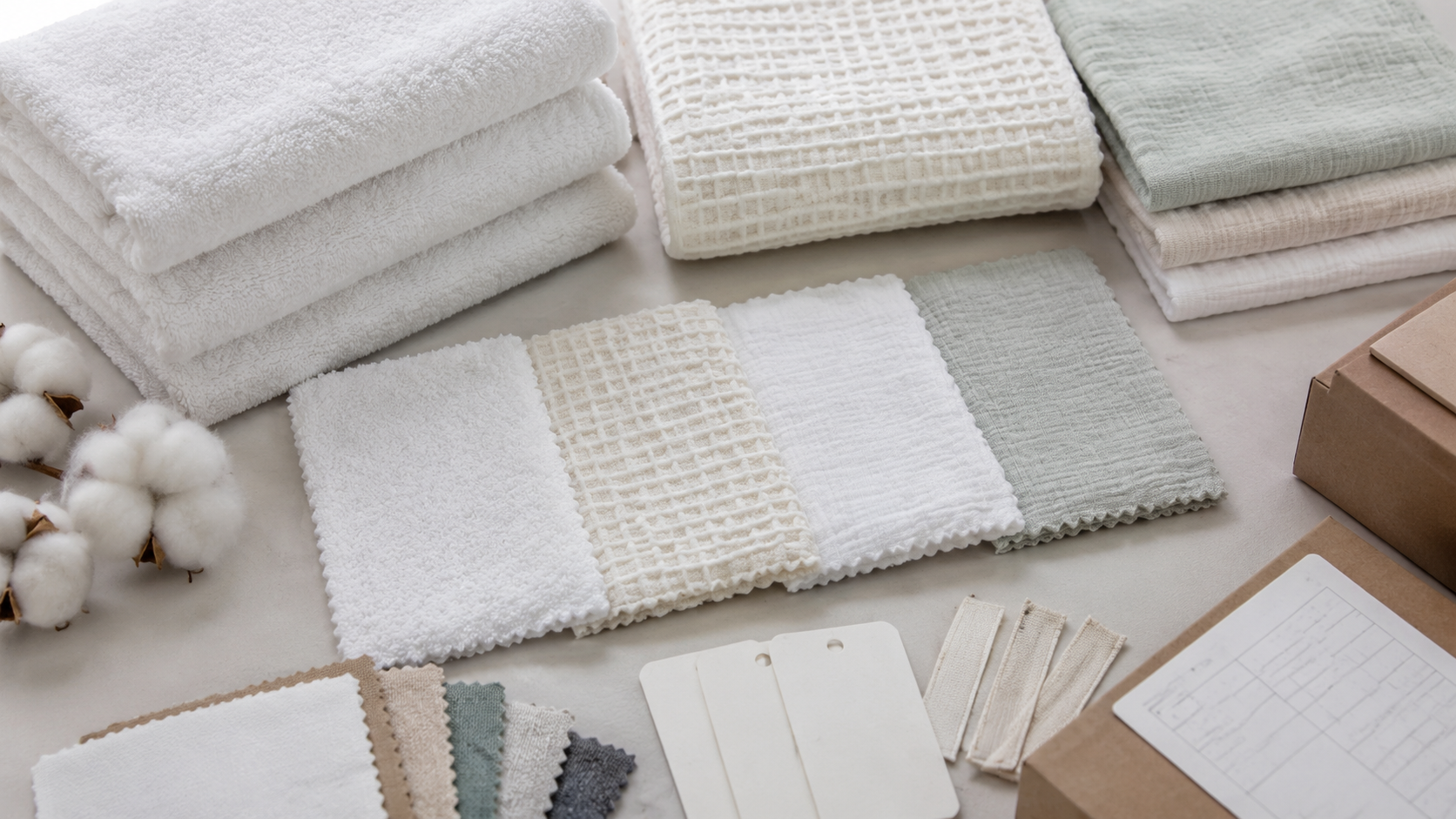
Towel material should be chosen by use case, hand feel, absorbency direction, drying needs, logo method, packaging, and target price level. Cotton terry, gauze, waffle, bamboo blend, and other buyer-directed materials should not be compared as if they behave the same.
Towel material choice should connect use case, hand feel, absorbency direction, texture, logo method, packaging, and price level.
The right towel material depends on the product role. A hotel bath towel, baby towel, sport towel, beach towel, retail towel set, and promotional towel may all need different fiber direction, texture, GSM, finishing, and packaging. Choosing material only by price can create problems later in hand feel, absorbency, care expectations, or customer reviews.
| Decision point | What the buyer should confirm | Why it matters |
|---|---|---|
| Cotton terry | Everyday bath towels, hotel towels, retail towels, and towel sets. | Practical for many towel programs, but GSM and construction still matter. |
| Gauze or muslin direction | Lightweight towels, baby-related uses, or soft texture projects when suitable. | Texture and washing behavior differ from terry. |
| Waffle texture | Beach towels, sport towels, home textiles, or design-led towel programs. | Creates a different touch and packing profile. |
| Bamboo blend or buyer-directed fabric | Soft hand feel or special positioning by project. | Final feasibility and claims should be confirmed by material source and sample result. |
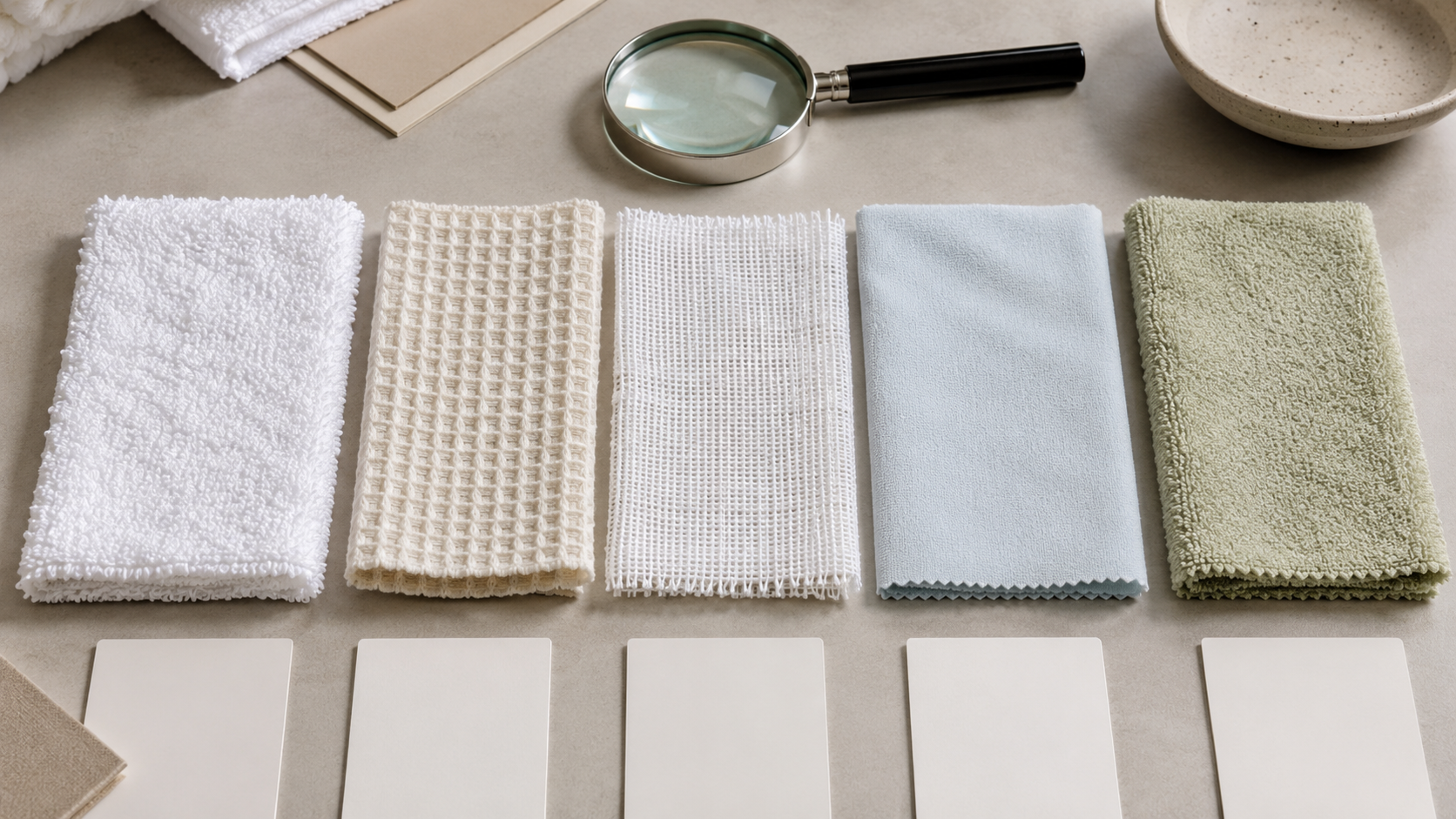
Use the target use case to decide which material direction deserves sampling.
- Define whether the towel is for hotel, retail bath, baby care, gym, travel, cleaning, gift, or private label sets.
- Compare texture, absorbency direction, drying expectation, GSM, logo method, and packaging behavior.
- Only use fiber or certification claims when the document scope and product applicability are confirmed.
A material approval record helps the buyer remember why one direction was chosen. It should capture the towel role, material direction, GSM, hand feel, drying expectation, color, logo plan, packaging, and any open questions.
For wholesale sourcing, material selection should start from use case, target market, price level, desired touch, washing needs, and branding plan. Once those points are clear, the supplier can help discuss whether cotton, bamboo blend, microfiber, gauze, waffle, textured fabric, or another buyer-directed fabric is practical.
Material choice should begin with the towel's job, not with the nicest-sounding fiber name. A retail bath towel, hotel towel, gym towel, baby towel, beach towel, and promotional towel all have different priorities for hand feel, absorbency direction, drying, weight, color, and price.
Cotton towels for broad daily use
Cotton is a familiar direction for bath towels, hand towels, face towels, hotel towels, and retail towel sets. Buyers often choose cotton when absorbency, natural hand feel, and everyday use are important. Cotton towel programs still need clear decisions on GSM, size, pile direction, color, edge finish, label, and packing method.
When comparing cotton towels, do not compare material name alone. Ask for the same size, GSM, color, and finishing direction. A lighter cotton towel and a heavier cotton towel can serve different customers even when both are described as cotton.
Bamboo blend for softer hand feel direction
Bamboo blend towels are often discussed when buyers want a smoother, softer touch. This direction may fit retail, spa, gift, or personal care programs, but the exact blend and construction need confirmation before sampling. Buyers should ask how the material affects hand feel, washing expectation, color, and cost direction.
If a project needs certification or specific fiber claims, confirm document requirements early. Do not place claims on packaging or product pages unless the actual certificate, scope, and product applicability are confirmed.
Microfiber and textured towel fabrics
Microfiber and other textured towel fabrics can be useful for sports, travel, cleaning, promotional, or soft-touch gift programs when the project scope is confirmed. They are not the same as cotton terry towels. Buyers should confirm whether the product needs absorbency, quick drying, compact packing, soft surface, or decorative presentation.
These materials can also affect logo method. Printing, embroidery, label placement, or heat transfer should be tested on the actual fabric rather than assumed from another towel type.
Gauze and waffle textures for lighter programs
Gauze, muslin cotton, and waffle textures can support lightweight towel programs, baby products, spa presentation, or quick-drying directions. They may feel thinner than terry towels, so buyers should explain whether the product is meant to be lightweight by design or whether customers expect a thicker bath towel feel.
How to compare material samples
When samples arrive, review hand feel, thickness, absorbency direction, edge finish, shrinkage expectation, color consistency, label placement, and packing. A material that looks good in a photo may feel different in hand. If the order is for a retail or private label program, review packaging together with the towel, not separately.
When comparing samples, use the same size, GSM direction, color family, and finishing if possible. Otherwise, the buyer may think one material is better when the difference is actually weight, pile, dyeing, or finishing.
What to send to the supplier
Send product use, target material or open material direction, size, GSM or weight expectation, color, logo, packaging, quantity, and reference photo. If you are unsure about material, describe the customer expectation and target price level. That gives the supplier enough context to recommend a practical direction.
Choose material by use case, not by name only
Material selection should begin with product use: hotel towel, retail bath towel, baby towel, gym towel, travel towel, gift item, or private label set. The same material name may still vary by yarn direction, texture, GSM, finishing, and washing behavior.
A buyer can ask the supplier to prepare practical material directions, but the sample should still be judged by touch, absorbency direction, drying expectation, logo compatibility, folding, packaging, and target price level.
Material approval details
Before approving material, confirm texture, color, GSM or weight direction, hand feel, washing expectation, logo method, label and packaging fit, and whether any fiber or certification claim is supported by documents.
If the buyer is not sure which material is practical, start with the channel and target user. The supplier can then help compare cotton, blend, microfiber, gauze, waffle, or other project-based directions without pretending that one material is best for every towel.
- Which material fits the target use and buyer channel?
- How will material affect GSM, hand feel, absorbency, and drying?
- Which logo method works on the chosen texture?
- How does the material fold and pack for retail or carton shipment?
- What sample test should confirm the material choice?
- Do not choose material only by a soft-sounding name.
- Do not make unsupported fiber or performance claims without documents.
- Do not compare terry, waffle, and gauze towels only by unit price.
FAQ
Is cotton always the best towel material?
Cotton is widely used, but the best material depends on use case, price level, hand feel, packaging, and target customer.
Can bamboo blend towels be used for private label programs?
They can be discussed, but blend direction, hand feel, color, sample result, and any certification claim should be confirmed before production.
Are microfiber towels the same as cotton towels?
No. Microfiber has a different touch, absorbency direction, drying behavior, and use case. It should be sampled and compared separately.
What if I do not know which material to choose?
Share the use case, target market, price level, and reference photo. The supplier can recommend material directions for sampling.